


About the Series:
Connecticut Bar Foundation and Connecticut Bar Association are honored to present an ongoing forum for the Connecticut legal community that explores issues of racial inequality and systemic racism.
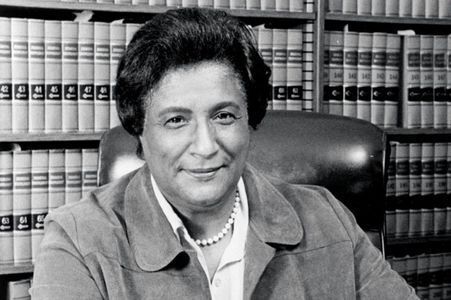
This series is named in honor of civil rights trailblazer Judge Constance Baker Motley with the goal of supporting and fostering renewed commitment to advancing civil rights and social justice.
About Constance Baker Motley (1921-2005):
Born and raised in New Haven, Connecticut, Judge Motley was recognized by Resolution of the United States House of Representatives of the 110th Congress in 2007 for her “lifelong commitment to the advancement of civil rights and social justice.”
Motley was the first female staff attorney at the NAACP Legal Defense and Education Fund (LDF), hired by then Chief Counsel Thurgood Marshall. She argued and won many of the defining cases in the civil rights movement, including those to desegregate schools and universities, housing, transportation, and public accommodations. Motley later became the first Black woman appointed as a federal judge, rising to Chief Judge of the United States District Court for the Southern District of New York in 1982.
Past Events
Past, Present and Future Impact of the History of Slavery in CT: Part 1 - Past
March 12, 2025. During this multi-part series, attendees will explore the history of slavery in Connecticut through a legal lens. During this first part of the series, attendees will discuss the history of slavery and its legality in the northern/New England states in the antebellum period, the early abolition movement, the economic impact of slavery during this time, and Connecticut’s gradual emancipation law, which resulted in slavery continuing in Connecticut as late as 1848, when there were only a handful of persons enslaved in the state. Later events in the multi-part series will examine the ways that the present legal sphere was shaped by CT’s history of slavery and explore current and future initiatives engaging with that history.
Speakers




Past is Present: How Racism Has and Does Shape Immigration in America
February 5, 2025. Join us for a conversation with a panel of esteemed professors who will discuss the history of American immigration laws, the motivations behind the enactment of various statutes and their racially disparate impact over the course of the last hundred and fifty years.
Speakers




Refuge: A Story about Fear and Love in the American South
October 1, 2024. The James W. Cooper Fellows of the Connecticut Bar Foundation, the Connecticut Bar Association, and the University of Connecticut School of Law invite you to join us for this special evening in connection with the Constance Baker Motley Speaker Series on Racial Inequality. We will continue the conversation that began at our Law of Hate Symposium held in November 2023. That event offered a safe and inclusive forum to discuss hate crimes and profile the work of the Connecticut Hate Crimes Advisory Council. Now, we look to dive deeper and explore these issues as they are reflected in Refuge, an award-winning documentary that follows a leader in a white nationalist hate group who finds healing from the people he once hated.
We will watch the film together, and are honored that we will then be joined by Din Blankenship, Refuge's co-director and co-producer, who will participate in a live Q&A after the conclusion of the movie.
Race Is Evidence: Exploring Discrimination in the Rules of Evidence
May 28, 2024. The Rules of Evidence are used on a daily basis in the legal system, but little thought is given to how those rules reflect the cultural norms, sensibilities, and racial biases operating at an institutional and societal level at the time they were written. Practitioners and laypeople alike may believe that the Rules of Evidence are unbiased and equitable, but we find racially coded language throughout, and the application of these rules cannot escape the system in which they are employed. Oftentimes, race and racism themselves are used as de facto evidence and sources of proof. This program explored the development of the Rules of Evidence, examining what was going on at the time the rules were developed, the many examples of how parties do not experience equitable evidentiary burdens, and the negative effect that racially-biased use of the Rules of Evidence can have on the economic empowerment of people of color. From lack of evidentiary scrutiny to the introduction of antiracist expert evidence, we can see how race is used as a proxy for credibility and character, further enflaming racial stereotypes and negatively influencing jurisprudential decision-making.
Speakers:
- Bennett Capers, Fordham University School of Law
- Montré D. Carodine, University of Alabama School of Law
- Jasmine Gonzales Rose, Boston University School of Law
Unpacking Barriers to Voting During an Election Year
April 24, 2024. The right to vote is the foundation of American democracy, enabling the ordinary citizen to raise their voice to reflect the collective will of the American people. But can the promise that a vote represents be realized when voters are confronted with significant obstacles to exercising that right? For generations, Black voters and other voters of color have faced discriminatory policies and other obstacles that disproportionately affect their communities. These obstacles include limited polling places, long lines at the polls, voter identification laws, restrictive voting hours, and fewer opportunities to vote by mail.
New voting laws recently enacted were designed to and will affect the 2024 elections. Over the past few years, many of those laws have restricted voting and made it more burdensome. Yet some states have put forward new laws to make voting easier. How will these laws affect voting in America during this critical election year? Join us as we discuss.
Speakers:
- Moderator: Michelle Querijero
- Professor Douglas M. Spencer, University of Colorado School of Law
- William Bloss, Koskoff, Koskoff & Bieder PC
Investigating Access to Public Spaces
February 21, 2024. This panel discussion dove deep into the history of discrimination in the Nutmeg State, looking at who was—and was not—permitted access to our public spaces. We looked at how this was effectuated through town ordinances, zoning, and caselaw. The landmark CT Supreme Court decision in Leydon v. Town of Greenwich was central to this conversation. The panelists also surveyed where we are currently.
Speakers:
- Erin Boggs, Executive Director, Open Communities Alliance
- Khalilah L. Brown-Dean, Quinnipiac University
- Andrew Kahrl, University of Virginia
- Brenden P. Leydon, Wocl Leydon LLC
Race, Pretrial Detention, and Disparate Outcomes
December 7, 2023. When it comes to pretrial release decisions, we know that anecdotally, race appears to be a factor in determining who is held and who is released. But research in this area confirms that behind these anecdotes is indeed hard data—statistics demonstrate the stark racial disparities and practical realities of who is held pretrial. This panel discussion explored that research, laying out the framework for these decisions as well as the risk assessment tools used as part of the calculation. And we took it further—exploring how the limitations of these risk assessment tools lead straight to inequality in the ultimate outcomes for these cases, and whether there is anything in the process or at the state legislative level that we can do to fix it.
Speakers:
- Moderator: Cody N. Guarnieri, Brown Paindiris & Scott LLP
- Vanessa R. Avery, United States Attorney for the District of Connecticut
- Dr. Sarah Picard, Center for Criminal Justice Research
- Alexander Shalom, ACLU, NJ
We See Color: Affirmative Action's Impact on Education & Its Future
September 27, 2023. The institution of affirmative action methodologies and requirements moved undergraduate and postgraduate schools to consider qualified students of all races, ethnicities, and genders in admissions decisions, thereby reducing discriminatory admissions practices. Consequently, student enrollments have more closely reflected representations of qualified students in relevant applicant populations. The Supreme Court’s decisions in the cases Students for Fair Admissions, Inc. v. Harvard and Students for Fair Admissions v. University of North Carolina have ended affirmative action admission practices. How could the removal of affirmative action affect college and law school admissions? What efforts can be made to preserve the rights of all applicants against discriminatory admission selection practices? How can we preserve diversity, equity, and inclusion in university and law school student bodies?
Speakers:
- Moderator: Brynn Cullen, Elevate Charter Schools
- Jay Austin, Law School Admission Council
- Specer Hill, Commission on Human Rights and Opportunities
- Alix Simonetti, New Haven
- Gayla Jacobson, CUNY School of Law
Summative Event - The Legacy of Judge Constance Baker Motley
June 13, 2023. The Constance Baker Motley Speaker Series on Racial Inequality's 2023 Summative Event will explore Judge Motley's legacy through the narratives of some of Connecticut's Black trailblazers. Our distinguished speakers will discuss the impact that Judge Motley had on their personal and professional lives. Through these stories, we will examine Judge Motley’s influence on education, criminal justice, her community, and the legal profession more broadly.
Speakers:
- Vanessa R. Avery, United States Attorney for the District of Connecticut
- TaShun Bowden-Lewis, CT Division of Public Defender Services
- Eboni S. Nelson, Dean, University of Connecticut School of Law
- Natalie Braswell, State of Connecticut
- Akilah N. Folami, Hofstra University Maurice A. Deane School of Law
The Rage of Innocence: Race and the Criminalization of Adolescent Behavior
March 15, 2023. Weaving together powerful narratives and persuasive data, Professor Kristin Henning explores the criminalization of normal adolescent behaviors and makes a compelling case that racial disparities in the juvenile and criminal legal systems are deeply rooted in America's unfounded, and sometimes intentionally manufactured, fears of youth of color. Unlike white youth, who are afforded the freedom to test boundaries and figure out who they are and who they want to be, Black and Latino youth are seen as a threat and denied the privileges of healthy adolescent play, adventure, and experimentation. Professor Henning will examine the long-term consequences of racism and trauma that arise from the discriminatory and aggressive “policing” of Black and Latino youth and demonstrate how contemporary law enforcement practices have socialized a generation of teenagers to fear and resent the police. Drawing upon recent advances in cognitive science and developmental psychology, this session will consider how racial bias, stereotype threat, and the traumatic effects of policing impact every aspect of a criminal case, including criminal culpability, search and seizure, police interrogation, mitigation and sentencing.
Highlighting findings from her book, The Rage of Innocence: How America Criminalizes Black Youth, Professor Henning will offer practical insights for serving youth of color and transforming systems that harm youth and young adults.
Speakers:
- Kristin N. Henning, Blume Professor of Law, Georgetown University Law Center
- Moderator: Aigné S. Goldsby, Letizia Ambrose & Falls PC
The World According to Dobbs: Racial Inequality and Stare Decisis
January 17, 2023. The decision in Dobbs v. Jackson Women’s Health Organization (Dobbs) overruled Roe v. Wade (Roe) and held that there is no constitutional right to an abortion. This decision will impact all women, but will significantly impact women in communities of color. Women from minoritized communities, especially Black women, face systemic inequities in health care and reproductive care. Black women are more likely to need access to abortions and die during childbirth, infant mortality rates are higher in communities of color, and access to reproductive healthcare is also limited in many of these communities.
This session discussed the road to Dobbs, including the history and background of contraception and abortion rights, the reasoning behind the expansion of rights over time, the impact/relationship to other substantive due process cases, and the impact on women of color. In addition, we discussed legislative developments since the decision last June.
Speaker:
- Kenneth J. Bartschi, McElroy Deutsch Mulvaney & Carpenter LLP
- Cynthia Soohoo, CUNY School of Law
- Dr. Nancy Stanwood, Chief Medical Officer, Planned Parenthood of Southern New England
Encouraging Equity in Special Education
December 1, 2022. Delivery of special education to students in Connecticut is a complex balance of interests between children, parents, schools, administrators, and government. Legal precedent and framework determine the rights and responsibilities of each participant and ultimately, the scope and quality of the special education students receive. This program explored Connecticut's special education system, the perspectives of parties involved, and the challenges and opportunities that arise in practice, all with the goal of encouraging equitable and excellent special education for all students.
Speakers:
- Moderator: Ron Houde, Bartlett & Grippe, LLC
- Daniel Curtis, Master Public Policy Candidate, Harvard Kennedy School
- Melissa Gagne, Laviano & Gagne, LLC
- Rebecca Rudnick Santiago, Shipman & Goodwin, LLP
- Bryan Klimkiewicz, Special Education Division Director, Connecticut State Department of Education
Disparate Outcomes in the Criminal Justice System: The Role of Prosecutorial Discretion
September 28, 2022. Prosecutors possess extraordinary discretion in deciding which cases and charges to pursue as well as which alternatives to consider. The exercise of this discretion plays a significant role in determining who ends up being convicted and for how long individuals are incarcerated. This program explored this prosecutorial power, discussed relevant Connecticut statistics of criminal justice outcomes and examined the important role of prosecutorial discretion in reducing the disparate racial impact of the criminal justice system.
Speakers:
- Moderator: Justice Lubbie Harper, Jr., Connecticut Supreme Court
- Tiheba Bain, Women Against Mass Incarceration
- Kyle Baudoin, Office of the Chief State's Attorney
- TaShun Bowden-Lewis, Chief Public Defender
- Professor Angela J. Davis, American University Washington College of Law
- Patrick Griffin, State of Connecticut Division of Criminal Justice
- Marc Pelka, State of Connecticut Office of Policy and Management
- Gordon W. Lyde, Waterbury Reentry Welcome Center
"Civil Rights Queen" - A Conversation With Tomiko Brown-Nagin
June 8, 2022. This year’s series culminated on June 8 with a speaker event featuring Professor Tomiko Brown-Nagin. She discussed her book Civil Rights Queen: Constance Baker Motley and the Struggle for Equality. 2021 marked the 100th birthday of Judge Constance Baker Motley and 2022 marked the release of Professor Brown-Nagin's major biography on Judge Motley. Tomiko Brown-Nagin is an award-winning legal historian, and an expert in constitutional law and education law and policy. She is also Dean for the Radcliffe Institute for Advanced Study and Daniel P.S. Paul Professor of Constitutional Law at Harvard Law School, as well as Professor of History at Harvard University. In this discussion, she shared her research and experience in capturing Judge Motley's story as well as her insight as to Judge Motley's legacy in the present day.
Speakers:
- Professor Tomiko Brown-Nagin, Dean of Harvard Radcliffe Institute
- Moderator: Aigné S. Goldsby, Letizia Ambrose & Falls PC
- Moderator: Ronald Houde, Ouellette Deganis Gallagher & Grippe LLC
Voting Rights 2: The Ongoing Battle at the Ballot Box
May 10, 2022. The November 3, 2020 presidential election gave rise to voter fraud claims in several states, demands for multiple recounts, numerous legal challenges, and violence at the US Capitol on January 6, 2021. These numerous voting fraud claims were refuted as unfounded and contrary to evidence. The 2020 election was confirmed to be “the most secure in American History” and free and fair, with no evidence of voter fraud. So why have over 30 states recently introduced legislation seeking to restrict voting access? Are these laws intended to ensure the integrity of the election process, or is their true purpose to limit citizens’ right to vote?
This 2-hour discussion drew on the experiences of legal academics, elected officials, and political observers. These experts explained how and why this legislation has become so widespread, and suggested what can be done to ensure that voters are not disenfranchised and remain free to fully exercise their right to vote. The webinar examined why this has become a national trend, how it affects us locally in Connecticut, and how it will impact future generations of voters. The panel also explored how the states passing this legislation are using it to perpetuate racial inequality in voting rights and political access. Picking up from where the August 2020 Motley Series event on voting rights left off, this program continued to analyze historical patterns and trends, and considered how systemic racism impacts voting rights and political access both on the national stage and in Connecticut. Our panelists are on the front lines of these voter battles in Connecticut, and have witnessed and studied how these policies seek to disenfranchise citizens, influence campaigns, and impact access to justice.
Speakers:
- Moderator: Dr. Khalilah L. Brown-Dean, Quinnipiac University
- Denise W. Merrill, Secretary of the State of Connecticut
- Attorney General William Tong, Office of the Attorney General
- Dan Barrett, American Civil Liberties Union of Connecticut
- Prof. Gloria Browne-Marshall, John Jay College of Criminal Justice
Critical Race Theory in Practice
March 22, 2022. Critical Race Theory (CRT) has been at the forefront of discussion in higher education and policy. This session explored the origins of CRT, the value of this approach in dismantling structural inequities in education, and criticisms as well as alternatives to CRT.
Speakers:
- Hon. Angela C. Robinson (Ret.)
- Dr. Jonathan L. Wharton, Southern Connecticut State University
Structural Racism, A “Systemic Illness”
February 24, 2022. A distinguished panel of doctors, public health, and legal professionals moderated by Professor Zita Lazzarini explore how structural racism impacts the health of diverse populations in Connecticut. The panel discussed mechanisms through which structural racism increases health disparities, how to reduce its impact, and increase health equity.
Speakers:
- Moderator: Zita Lazzarini, JD, MPH, University School of Medicine
- Linda Barry, MD, MPH, University of Connecticut School of Medicine
- Rocio Chang-Angula, Psy.D, University of Connecticut School of Medicine
- Tiffany Donelson, MPH, Connecticut Health Foundation
- Nichelle Mullins, JD, MHA, Charter Oak Health Center
- Christopher Steele, MD, MPH, University of Connecticut School of Medicine
Colorism Matters: Skin-tone bias and the DE&I and Belonging Conversation
February 8, 2022. Professor Trina Jones, the Jerome M. Culp Distinguished Professor of Law at Duke University School of Law, took us on a journey to understand colorism and its impact on society, and particularly the legal profession. Professor Kathy Taylor lead us on a moderated discussion of colorism with Professor Jones.
Speakers:
- Moderator: Kathy Taylor, Professor of Legal Studies, Naugatuck Valley Community College
- Trina Jones, Jerome M. Culp Distinguished Professor of Law, Duke University School of Law
The CBA Task Force's Recommendations on Policing in Connecticut
November 4, 2021. In the wake of the George Floyd homicide, a diverse group of attorneys, community members, and law enforcement leaders met on a weekly basis for over a year to discuss, research and make recommendations to the State legislature and other stakeholders regarding policing in Connecticut. It is anticipated their work will culminate in a written report to be publicly released this fall. In this session, leaders and key members of this Task Force shared what they learned and what they recommend we do to address the challenges in policing and to improve relations between police and the communities they serve.
Speakers:
- Moderator: Karen DeMeola, University of Connecticut School of Law
- Kenneth Barone, Central Connecticut State University
- Deirdre M. Daly, Finn Dixon & Herling LLP
- Doris Dumas, President, NAACP, New Haven Branch
- Rev. Keith A. King, Christian Tabernacle Baptist Church
- Keith Mello, Chief, City of Milford Police Department
- Alexis H. Smith, Executive Director, New Haven Legal Assistance Association Inc.
The Trials of Constance Baker Motley: A Centennial Retrospective
September 21, 2021. September 14, 2021 marks what would have been the 100th birthday of Judge Constance Baker Motley. In this inaugural series event for the 2021-2022 bar year, we are celebrating the life and legacy of Judge Motley. We will start with a screening of The Trials of Constance Baker Motley, a 2015 documentary produced by her son, Joel Motley. The documentary spans her remarkable legal career, including, but not limited to, her work with Justice Thurgood Marshall and the NAACP and her landmark civil rights cases before the US Supreme Court, as well as her accomplishments as the first African-American woman elected to the New York State Senate, the first woman elected as Manhattan Borough president, and the first African-American woman appointed to the federal bench. The documentary will be followed by a discussion and reflection on Judge Motley with her son Joel W. Motley, niece Constance L. Royster, and former law clerk Daniel J. Steinbock.
Speakers:
- Moderator: Kate Stith, Yale Law School
- Joel W. Motley, Public Capital Advisors LLC
- Constance L. Royster, Principal, Laurel Associates LLC
- Daniel J. Steinbock, The University of Toledo College of Law
- Marilyn J. Ford, Quinnipiac University
The Color of Law: A Forgotten History of How Our Government Segregated America
June 15, 2021. Racial segregation characterizes every metropolitan area in the US and bears responsibility for our most serious social and economic problems. We’ve taken no serious steps to desegregate neighborhoods, however, because we are hobbled by a national myth that residential segregation is de facto—the result of private discrimination or personal choices that do not violate constitutional rights. The Color of Law demonstrates, however, that residential segregation was created by racially explicit and unconstitutional government policy in the mid-twentieth century that openly subsidized whites-only suburbanization in which African Americans were prohibited from participating. Only after learning the history of this policy can we be prepared to undertake the national conversation necessary to remedy our unconstitutional racial landscape.
Chief Justice Richard A. Robinson will facilitate a question and answer segment with Rothstein. A panel discussion will follow to highlight what has been done in the past year and how we will continue to address racial inequality in Connecticut in honor of the legacy of Hon. Constance Baker Motley.
Richard Rothstein is the author of "The Color of Law: A Forgotten History of How Our Government Segregated America", a "New York Times" Best Seller, and a distinguished fellow of the Economic Policy Institute, the Thurgood Marshall Institute of the NAACP Legal Defense Fund, and of the Haas Institute at the University of California (Berkeley). In addition to "The Color of Law", he is the author of many other articles and books on race and education.
Speakers:
- Moderator: Chief Justice Richard A. Robinson, Connecticut Supreme Court, Hartford
- Joel W. Motley, Public Capital Advisors LLC
- Richard Rothstein, Distinguished Fellow, Economic Policy Institute
- Sara C. Bronin, Professor, University of Connecticut School of Law
- Khalilah L. Brown-Dean, Associate Professor, Quinnipiac University
- Deirdre M. Daly, Partner, Finn Dixon & Herling LLP
- Constance L. Royster, Principal, Laurel Associates LLC
Eradicating Racial Bias in Jury Selection & Jury Deliberation
April 21, 2021. In a tumultuous year that has brought long-avoided issues of racial injustice to the fore, Connecticut is considering certain proactive steps to try to eradicate racial bias in jury selection and deliberation in both civil and criminal cases. Following the release of specific recommendations by the Jury Selection Task Force appointed by Chief Justice Robinson, this event will explore the proposals aimed at identifying and eliminating various forms of conscious and unconscious bias from jury selection and deliberation. Attendees are encouraged to review the Task Force Report and pose questions for the panelists both before and during the event.
Panelists in this session will include Task Force chairs and participants, who will discuss:
- the history and inadequacies of Batson v. Kentucky challenges both theoretically and in practice
- the case of State v. Holmes, which led to the changes being considered in Connecticut
- a groundbreaking Practice Book rule proposed by the Task Force to eliminate the use of peremptory challenges rooted in improper racial attitudes and practices
- other Task Force proposals, including those relating to increasing participation in the jury system by historically underrepresented communities; enhanced record keeping of jury selection practices; improved explanations to jurors of the pitfalls of unconscious bias; and increased participation by felons and legal permanent residents who are not citizens
If adopted, the proposed changes will substantially alter the jury selection process in Connecticut to ensure that a fair cross section of the population is serving on juries, and put our state in the forefront of those attempting to improve racial justice in our courts at a time when many question the fairness of our judicial system.
Speakers:
- Moderator: Hon. Omar A. Williams, Judge, Hartford Superior Court
- Moderator: Hon. Chase T. Rogers (Ret.), Partner, Day Pitney LLP, Chief Justice, Connecticut Supreme Court (Ret.)
- Hon. Douglas S. Lavine, Judge Connecticut Appellate Court
- Richard J. Colangelo, Jr., Chief State's Attorney, State of Connecticut
- Christine P. Rapillo, Chief Public Defender, State of Connecticut
- Preston Tisdale, Attorney, Koskoff Koskoff & Bieder PC
The Fair Housing Act and Insurance
April 16, 2021. The test for determining discriminatory effect, so as to establish actionable discrimination under the FHA, has been considered extensively in the courts. Rulemaking during the Obama administration attempted to codify this. Most recently the Department of Housing and Urban Development sought to restate this rule, ostensibly to reflect a Supreme Court decision (Inclusive Communities). With the rule being challenged in the courts and a new administration, how this will impact homeowners insurers hangs in the balance.
Speakers:
- Moderator: Robert Yass, Adjunct Faculty, University of Connecticut School of Law
- Dan Barrett, Legal Director, American Civil Liberties Union of Connecticut
- Elizabeth Dwyer, Superintendent, Rhode Island Department of Insurance
- Daniel Schwarcz, Fredrikson & Byron Professor of Law, University of Minnesota School of Law
Structural Racism and Financial Services
March 18, 2021. This panel will feature legal scholars and experts who study historical and ongoing inequities in our banking system and financial services more broadly, and/or who are actively engaged in working to address those inequities through policy activism and innovation within the industry.
Speakers:
- Moderator: Annie Harper, Instructor, Yale School of Medicine
- Abbye Atkinson, Assistant Professor of Law, UC Berkeley School of Law
- Rebecca Borné, Senior Policy Counsel, Center for Responsible Lending
- Ashley Harrington, Federal Advocacy Director, Center for Responsible Lending
Language and the Law
February 5, 2021. This webinar will focus on the impact of language in the legal profession, particularly how diverse languages, accents, dialects and proficiency levels of parties, witnesses, lawyers and jurors impact legal professionals' perceptions of their legitimacy, credibility and professionalism.
Speakers:
- Moderator: Martin Antonio Sabelli, Law Offices of Martin A. Sabelli
- Dominique M. Clayton, Director, Academic Services and Writing Center, Bellarmine University
- Cynthia W. Esqueda, Associate Professor of Psychology, Institute for Ethnic Studies, University of Nebraska
- Jasmine Gonzales Rose, Professor of Law and Associate Director for Policy, Center for Antiracist Research, Boston University School of Law
Policing and Race in America: Past, Present, and Future – Part 2
January 21, 2021. This session will focus on biases in policing and the impact on communities, mainly communities of color. Panelists will provide insight into strategies and changes some police departments have implemented to mitigate bias and improve community relations.
Speakers:
- Moderator: Charles Grady, Community Outreach Specialist, Federal Bureau of Investigation
- Tiheba Bain, Founder, Women Against Mass Incarceration
- Kenneth Barone, Project Manager, Institute for Municipal and Regional Policy at Central Connecticut State University
- John "Jack" Drumm, Chief of Police, Madison Police Department
- Warren E. Hardy, Founder, Helping Young People Evolve (H.Y.P.E.)
Structural Racism in Employment
December 16, 2020. This panel will feature scholars and/or advocates who will show how structural racism operates to the disadvantage of domestic workers, immigrant workers, and workers entangled in the criminal justice system, among others, and what it would take to combat that structural racism.
Speakers:
- Moderator: Sachin S. Pandya, University of Connecticut, Storrs
- Shannon Gleeson, Cornell University
- Lori Isley, Columbia Legal Services
- Han Lu, National Employment Law Project
- Natalicia Tracy, Brazilian Worker Center
Policing and Race in America: Past, Present, and Future - Part 1
December 3, 2020. How did policing start and evolve in America and what is the role that race has played in the formation and development of police departments and policing? Learn about the history of policing and join our panel to discuss the current role of race in how departments police their communities.
Speakers:
- Moderator: Eboni S. Nelson, Dean, University of Connecticut School of Law
- Richard J. Colangelo, Jr., Chief State's Attorney, State of Connecticut
- Rahsaan D. Hall, American Civil Liberties Union of Massachusetts
- Christine P. Rapillo, Connecticut Office of Chief Public Defender
- Vernon L. Riddick, Jr., West Hartford Police Department
- Heather Ann Thompson, University of Michigan
Equity Through Zoning Reform in Connecticut
October 16, 2020. This program will feature land use attorneys, including two law professors, discussing how the structure of land use decision-making in Connecticut can impede policies and decisions that promote racial and economic equity, with a focus on several types of exclusionary zoning regulations; and current efforts to revise state zoning laws to promote desegregation.
Speakers:
- Moderator: Jacqueline O. Kaufman, Carmody Torrance Sandak & Hennessey LLP
- Sara C. Bronin, University of Connecticut School of Law
- Timothy S. Hollister, Shipman & Goodwin LLP
- Anika Singh Lemar, Yale Law School
How the Law Structures Educational Inequities
September, 24, 2020. This panel will feature legal and education scholars who study inequities in primary and secondary educational systems, how school districts are organized and funded, and how inequities manifest in differential school funding, resources, and outcomes.
Speakers:
- Moderator: Jacqueline Rabe Thomas, Connecticut Mirror
- John C. Brittain, University of the District of Columbia David A. Clarke School of Law
- Kara Finnigan, University of Rochester Warner School of Education
- Erika K. Wilson, University of North Carolina at Chapel Hill School of Law
Systemic Racism, Voting Rights, and American Democracy
August 25, 2020. This 90-minute seminar draws on the experiences of legal academics, elected officials, and political observers to explain how certain fundamentals of our democracy are used to disenfranchise citizens – limiting who has political power, who exercises the right to vote, and who has a voice in our government institutions – on the basis of race. The seminar will explore the systems that perpetuate racial inequality in voting rights and political access: the history and dangerous effects of “gerrymandering”; the dismantling of the Voting Rights Act of 1965, which was enacted to help achieve racial equality and representation; and how voter restriction and intimidation efforts accomplish racial disparities in the exercise of voting rights. The programming will look at historical patterns and trends, and how systemic racism impacts voting rights and political access on the national stage and in Connecticut.
Speakers:
- Moderator: Duby McDowell, McDowell Communications Group
- Jahana Hayes, United States Representative, representing Connecticut's Fifth Congressional District
- Douglas M. Spencer, University of Connecticut School of Law
- Saud Anwar, MD, Connecticut State Senator, representing the Third State Senatorial District
Segregated Communities and Opportunity
August 12, 2020. This 90-minute seminar uses maps, original photographs, and oral histories to explain how 100 years of discriminatory land use and development policy built and maintains our segregated state. The seminar will also examine the lasting effect these policies have on housing choice and the lives of people of color, particularly lower income Black and Latino families, who have few options to move to areas with high performing schools and safe neighborhoods. The programming is Connecticut-specific and demonstrates how national level policy and funding continue to influence local development and the lives of Connecticut residents.
Speakers:
- Erin Boggs, Open Communities Alliance
- Lonnie Braxton II, National Association for the Advancement of Colored People
- Arthur Gailes, Othering & Belonging Institute at UC Berkeley
- Pastor AJ Johnson, Center for Leadership and Justice; Urban Hope Refuge Church
- Erin E. Kemple, Connecticut Fair Housing Center
- Sophia Lopez, Trinity College
A Virtual Conversation on Racial Injustice
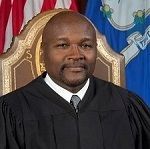
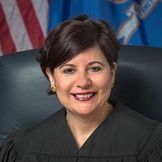
July 15, 2020. This is the inaugural event of the Constance Baker Motley Speaker Series on Racial Inequality, an ongoing forum for the Connecticut legal community to explore issues of racial inequality and systemic racism. It featured Chief Justice Richard Robinson and Justice Maria Kahn.
Welcome and Introduction of Speakers
Dan Schwartz, Chair, Connecticut Bar Foundation James W. Cooper Fellows
Introduction of Moderators
Amy Lin Meyerson, President, Connecticut Bar Foundation
Remarks on Constance Baker Motley
Professor Marilyn Ford, Quinnipiac University School of Law and Joel Motley, son of Judge Constance Baker Motley
Closing Remarks
Cecil Thomas, President-Elect, Connecticut Bar Association

RESOURCES REFERENCED
Book - The Color of Law: A Forgotten History of How Our Government Segregated America, Richard Rothstein, Liveright (2017)
Report - "Demographic Differences in Sentencing: An Update to the 2012 Booker Report," United States Sentencing Commission (2017)
