


About the Fund & Award
-
Tony was a “lawyer’s lawyer.” He trained a generation of Carmody attorneys and earned the respect and admiration of his clients and colleagues. Tony was a long-time supporter of Connecticut Bar Foundation and was a Charter James W. Cooper Fellow. Carmody lawyers and staff, friends, and others made the initial contributions to the Fund, and proceeds were donated to CBF to establish the Fund.
The Award recognizes excellence in advocacy, a hallmark of Tony’s career. It provides an opportunity to acknowledge the dedicated service and outstanding achievements of CT nonprofit civil legal service providers or legal aid attorneys who demonstrate a commitment to the provision of zealous and skilled legal representation to low-income clients. CBF presents the award and cash prize annually.
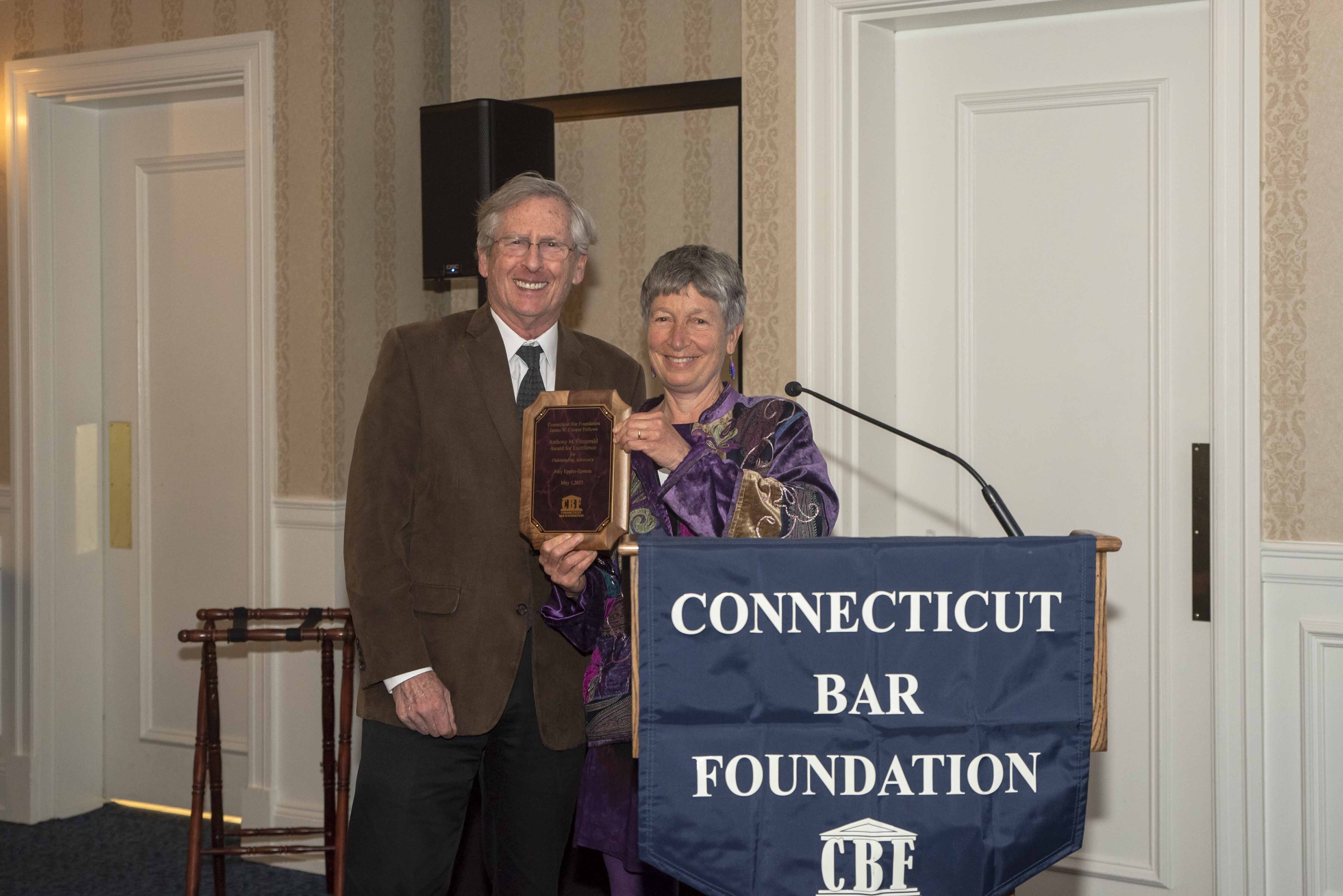
Amy Eppler-Epstein, 2025 Fitzgerald Honoree
New Haven Legal Assistance Association
New Haven Legal Assistance Association, Inc. (NHLAA) is a nonprofit organization that was incorporated on April 7, 1964 to “secure justice for and to protect the rights of those residents of New Haven County unable to engage legal counsel.” NHLAA was one of the first legal services programs established and the federal government used it as a model for similar programs throughout the country. NHLAA is an office of attorneys, paralegals, and legal secretaries committed to protecting the rights and improving the lives of our client communities. Many of its staff have been with the organization for more than twenty years.
NHLAA offers free, high-quality legal services to people living in poverty in New Haven County and the Lower Naugatuck Valley. They strive to provide equal access to the justice system, enhance the rights and living conditions of their client community, and help that client community protect their own rights. NHLAA accomplishes these goals by providing legal advice, brief service, and full representation to individual clients; strategically prioritizing legal work that will make systemic improvements benefitting large numbers of low-income people; and engaging in community education and outreach. NHLAA represents seniors, people with mental and physical disabilities, children, domestic violence survivors, immigrants, low-wage workers, families at risk of homelessness, and individuals who face additional challenges to representing themselves, such as those with limited English proficiency.
The organization relies on private donations and grants to support its work.
Nominations and Selection
The award recognizes the dedicated service and outstanding achievements of a Connecticut nonprofit civil legal service provider or legal aid attorney(s). CBF Awards Committee solicits nominations from the James W. Cooper Fellows, and may consider nominations from other sources. A nomination should describe how the nominee has demonstrated excellence in the provision of zealous and skilled legal representation for low-income clients in Connecticut.
Eligibility
Connecticut Bar Foundation presents the Anthony M. Fitzgerald Award for Excellence to a legal service provider that currently receives an Interest on Lawyers Trust Account grant from CBF ("Grantee"), or an attorney employed by, or who provides volunteer legal services through, a Grantee. Access to justice is a fundamental right, and legal aid providers and attorneys perform a crucial role in ensuring fair and equal access to those most at risk of being excluded from our legal system. Without the zealous and passionate representation of civil legal aid providers, those who face the loss of basic human needs – including housing, safety from domestic violence, health care benefits, employment, and educational opportunities – are often ill-equipped to protect their legal rights.
The Anthony M. Fitzgerald Award for Excellence honors legal service providers and attorneys who demonstrate a commitment to providing skilled legal representation for low-income clients, including direct client or other activities that ensure that Connecticut citizens have legal assistance when facing important civil legal concerns affecting their safety, health, shelter, and survival. Other activities may include implementing a new legal service program, project, or service that expands access to justice for low-income residents of Connecticut.
